
Practical guidance for local authorities, planners and decision-makers
Put simply: through water. Because these seemingly contradictory climate effects have the same root cause: a disrupted water cycle. Sealed surfaces, dense development and a lack of green spaces prevent the natural infiltration, storage and evaporation of rainfall.
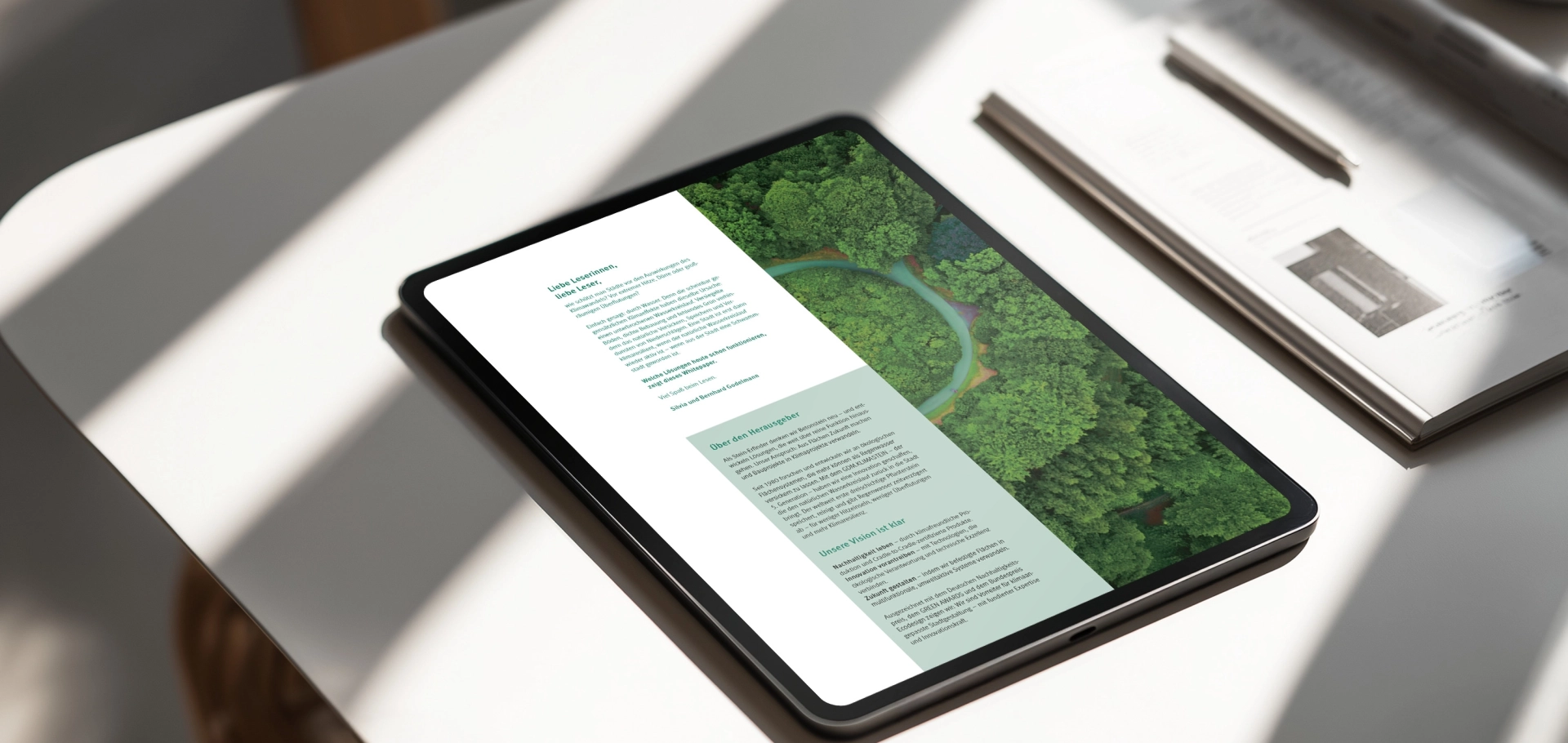
Simply submit the form to receive the white paper “Climate protection starts at ground level: Climate resilience as a strategy for the future” free of charge. Designed specifically for local authorities, planners and decision-makers.
Following a brief verification of your details, you will receive the corresponding download link.
By clicking the ‘Submit’ button, you confirm that you have read and agree to ourprivacy policy.
Introduction to the first chapter. The current situation in Europe: high risks, high damage, high costs and the transition to ‘sponge cities’ through land de-sealing.
Challenges in planning and the best solutions. An overview of 12 key points.
We hold the key to the consequences ourselves. Current risks posed by separate water cycles and climate resilience through natural water cycles.
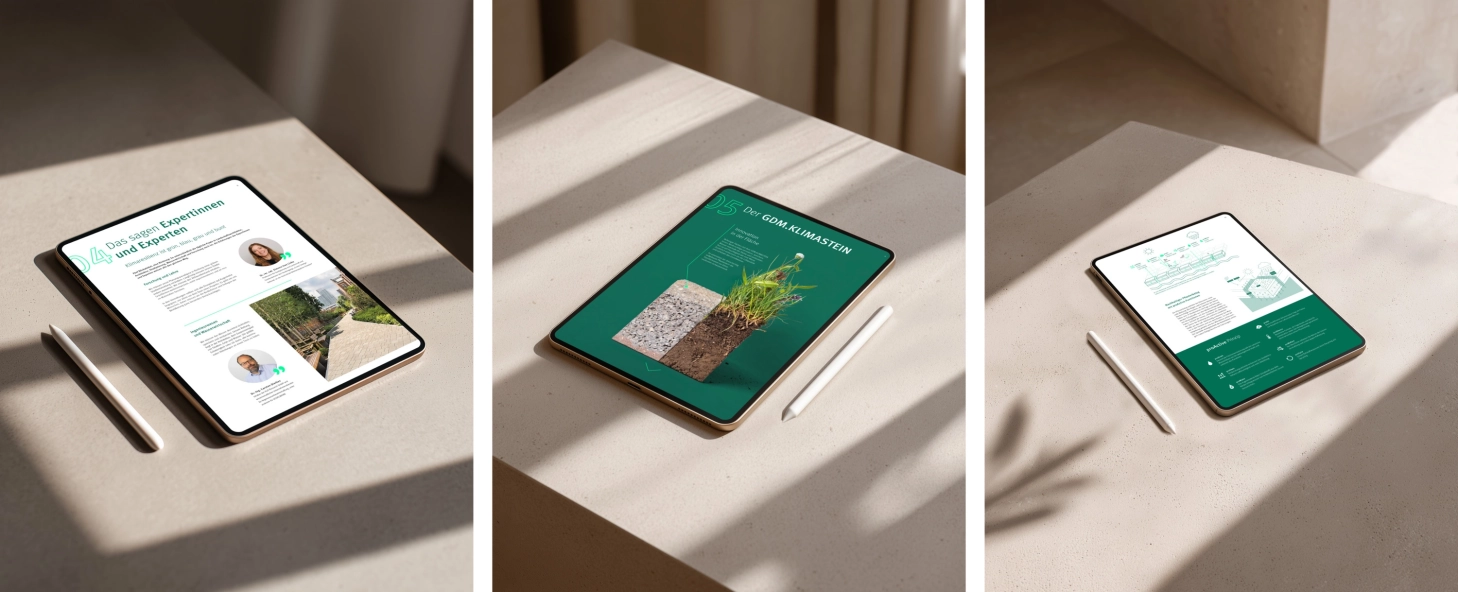
Climate resilience is green, blue, grey and colourful. Five perspectives, one direction: however varied daily practice may be in landscape architecture, architecture, urban planning, water management and research, the experts’ experiences all point in the same direction.
Innovation across the board. How exactly does the three-layered paving stone support the transformation towards a climate-resilient sponge city?
Unsealing as the key to the sponge city. A selection of construction projects: the redesign and unsealing of town centres, urban neighbourhoods, public spaces and school playgrounds using the GDM.KLIMASTEIN demonstrates how construction projects become climate projects.

Having been honoured with the German Sustainability Award, the GREEN AWARDS and the Federal Ecodesign Award, we demonstrate that we are pioneers in climate-adapted urban design – backed by sound expertise and innovative strength.